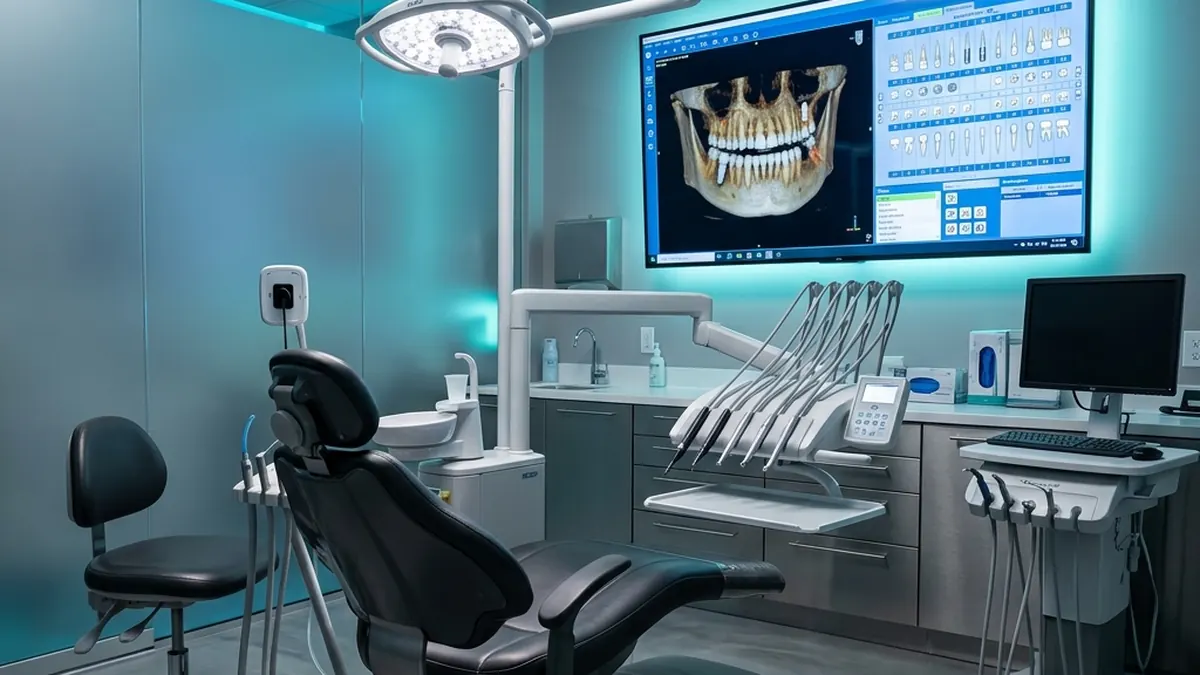
A dental practice isn't a law firm with a filing cabinet or a restaurant with a POS terminal. It's a healthcare facility running complex clinical software, managing thousands of high-resolution images, transmitting protected health information daily, and operating under federal compliance regulations that carry civil and criminal penalties. The IT provider managing your network needs to understand all of that. Most don't.
The Generic IT Provider Gap
We've inherited dozens of dental practices from generalist IT providers. In nearly every case, we find the same gaps:
They Don't Know Your Software
When a generic IT provider gets a call that "Dentrix isn't working," they open a browser and Google it. They don't know that Dentrix uses SQL Server underneath, that the most common cause of Dentrix slowness is SQL Server index fragmentation, or that a Dentrix database backup is different from a Windows file backup. This means every Dentrix ticket takes three times as long as it should — and the resolution is often a workaround rather than a fix.
They Don't Understand HIPAA Technically
HIPAA's Technical Safeguards (45 CFR §164.312) require specific controls: audit logging, automatic logoff, encryption, transmission security, and documented emergency access procedures. A generic IT provider may implement some of these incidentally, but they're not thinking about HIPAA when they configure your network — they're thinking about making things work. Those two goals sometimes diverge in ways that create compliance exposure you don't know about until an audit or a breach.
Examples of what we find from generic IT setups:
- Shared login credentials for Dentrix ("Everyone uses the admin account")
- Unencrypted patient email from the front desk to referring dentists
- No HIPAA-compliant BAA with the IT provider themselves
- Workstation audit logging disabled or never reviewed
- Cloud backups stored in a vendor with no executed BAA
They Don't Configure Networks for Clinical Environments
A dental network has specific design requirements that most generic IT providers don't implement: clinical VLANs isolated from patient-facing networks, QoS policies that prioritize imaging traffic, network segmentation that limits lateral movement if one device is compromised. Without these, your practice is both less secure and less performant than it should be.
They Don't Know Your Hardware
Digital sensors, intraoral cameras, CBCT units, panoramic X-ray stations — each connects to your network and computer systems in specific ways. When a sensor stops communicating with the workstation, the diagnosis is completely different from a typical computer peripheral problem. A generic IT provider will waste hours on a problem a dental IT specialist diagnoses in minutes.
What Dental-Specialized IT Actually Looks Like
At Dental Networks, dental IT specialization means:
- Our technicians have used Dentrix, Eaglesoft, and Dolphin — not just read about them
- We execute a HIPAA-compliant BAA as part of every service engagement
- Our network designs include clinical VLAN isolation as a standard component, not an add-on
- We understand dental imaging hardware and can troubleshoot sensor, camera, and CBCT connectivity issues directly
- We proactively monitor for HIPAA compliance gaps — audit log anomalies, unencrypted transmissions, unsecured devices
This specialization is backed by the engineering resources of TechniWorx — meaning complex problems never outpace our ability to resolve them. You get a dental specialist at the front, with enterprise engineering depth behind them.
Ready to Switch to Dental-Specialized IT?
Contact us for a free assessment of your current IT environment and a proposal for what specialized dental IT management looks like for your practice.
Schedule a Free IT Assessment